
WILDEBEEST MIGRATION PATTERN
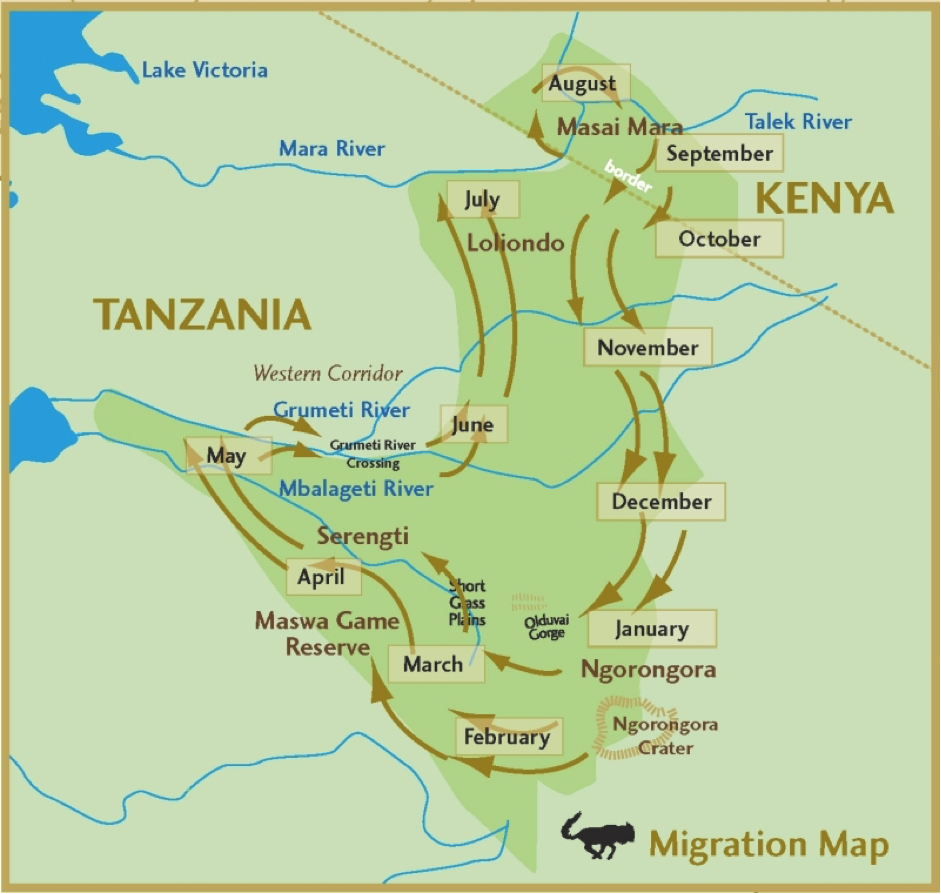
Rated as one of the most spectacular Natural events on the planet.Over a million Wildebeest,Zebra and antelope migrate clockwise through Masai Mara and Serengeti eco-system.
TIPS ON WILDEBEEST MIGRATION
Book Early
During the months of June,July and August is the peak season in Kenya. This is when the wildebeest crossover to Masai Mara from Serengeti. At this times the hotels and safari vehicles are in short supply. We normally advice our guests to book 3-4 months in advance to ensure rooms at some of our best lodges and camps.
More days around the action
To view the great wildebeest herd cross the Mara river is the summit of the great wildebeest migration,however, it happens striclty by chance and there is no guarantee that you will see the crossing. However to increase the chances we advice you spend atelast 3 nights in Masai Mara Game Reserve
4x4 Safari Landcruisers
These safari vehicles are specifically built for the African Safari roads and at the same time offer comfortability. We always advice our guests to use this tough safari machines.
Migration Safari Packages
7th WONDER OF THE WORLD
November & DecemberShort rains begins, the great herds arrive on the short-grass plains of the Central and Eastern Serengeti where they feed on the nutritious grass. Back from a 2000 mile trek where almost a quarter of the herds have been killed by predators,exhaution and sickness.
January,February & March
This is the breeding season. Also known as the calving period. This time, great numbers of calves are born totaling to almost half of the wildebeest population.This significantly restores the herd numbers to its previous glory.This spectacular event occurs in the Southern part of Serengeti where it previously rained and grass is abundant.
May
At this time a great percentage of grass is diminished and the herds move north in the quest for fresh grass and water. Hundreds of Zebras and Gazelles join the herds knowing too well the price of fresh grass awaiting the otherside or simply taking advantage of benefits that comes with numbers.
June
They finally arrive at the Grumeti River where the migration is brought to stop. Here they converge in large numbers before taking the leap of Faith. Beneath the shallow waters are large crocodiles desparately looking foward to their annual feast.However these are shallow waters and most of the herds are able to cross without difficulty. This cannot be compared to what awaits them at the Mara River.
July
Perhaps the time when the great herds will be put to test. Crossing the Mara river is undoubtly the greatest natural phenomenon.With the onset of rains the river is flacid,presenting a major obstacle to the migration.The Mara river is terrifying to the wildebeest firstly because of the animals’ fear of the water itself and the creatures it may hide, and secondly because water generally means vegetation, and thickets that may conceal predators. Yet the wildebeest have an inherent instinct to trek in a certain direction at any cost – despite their terror.
August, September & October
Once on the grasslands of the Maasai Mara, the wildebeest spend several months feeding and fattening once more, taking advantage of the scattered distribution of green pastures and isolated rainstorms. A remarkable feature of their wanderings is their ability to repeatedly find areas of good grazing, no matter how far apart. The physiology of the wildebeest is such that it has been designed by evolution to travel large distances very quickly and economically, apparently requiring no more energy to run a certain distance than to trudge along at walking pace. Every facet of its life and behavior is designed to save time – wildebeest even mate on the move, and newborns are, as we have seen, up and running in minutes. In the following days, they will quickly re-assemble and begin their 2000 mile trek to the Serengeti, by then a huge number of the herd will have been killed and hence need to re-populate.